The madrasah
Madrasah software for UK mosques
Live
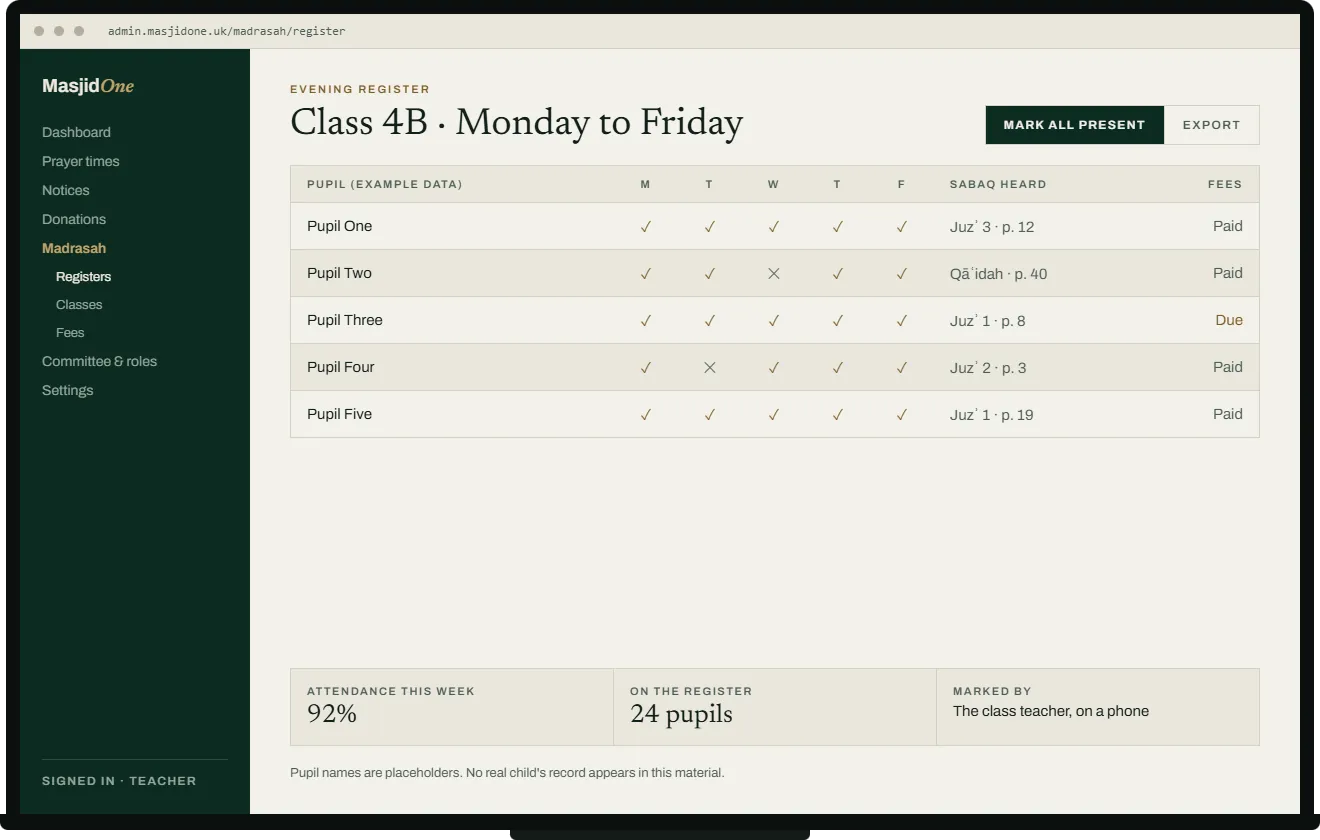
Most madrasahs run on a paper register, a fees book and one volunteer's spreadsheet. That works until somebody asks which children have missed three weeks running, or which families are behind — and then it takes an evening of turning pages. This is the part that answers those two questions in a few seconds, and it is built and in a masjid now.
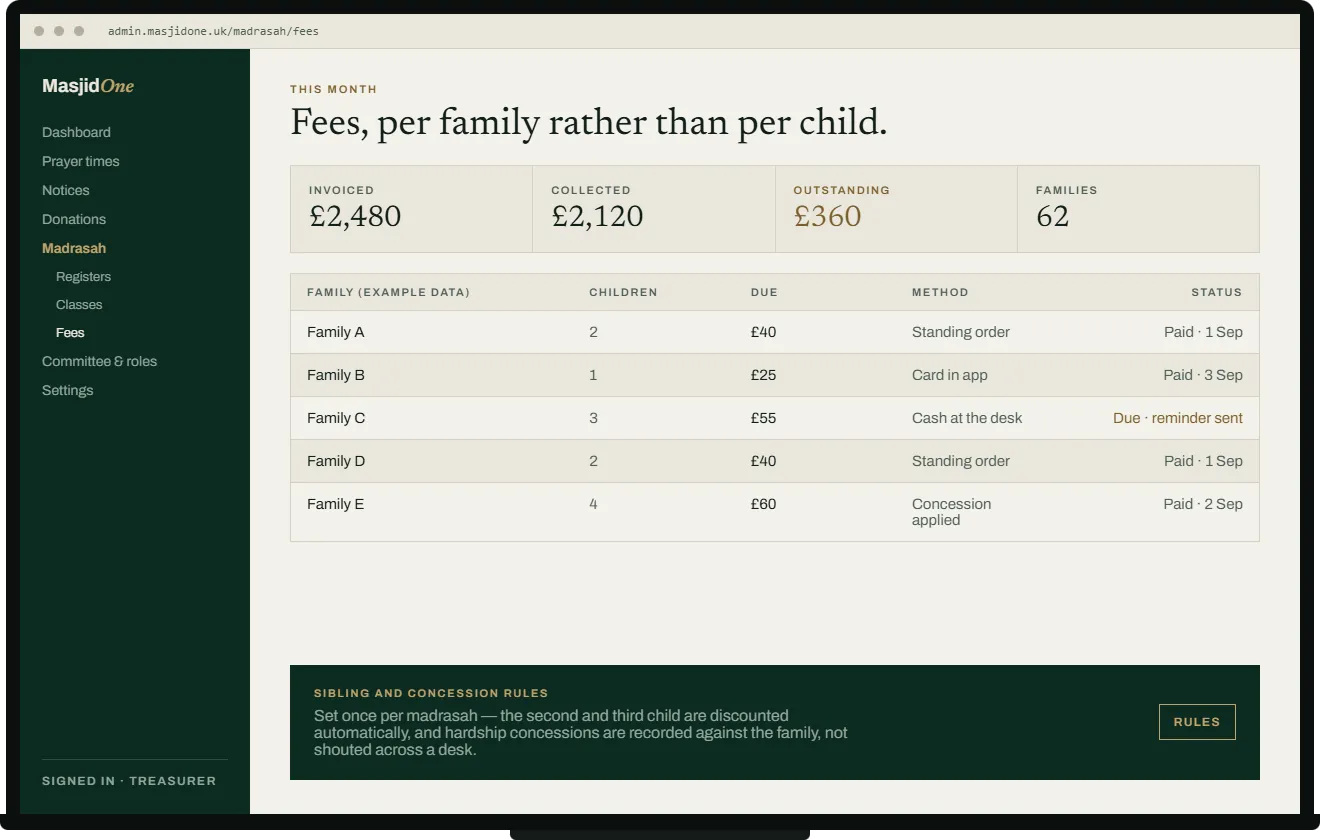
Fees charged per family, not per child
A household with three children is one bill and one conversation, not three of each. Rates, periods, charges, payments and balances sit against the family, reminders go out without anybody remembering to send them, and the office gets an annual report and a family export at the end of it. The screen answers the question a treasurer actually has — who is behind, and by how much — without anybody adding up a column.
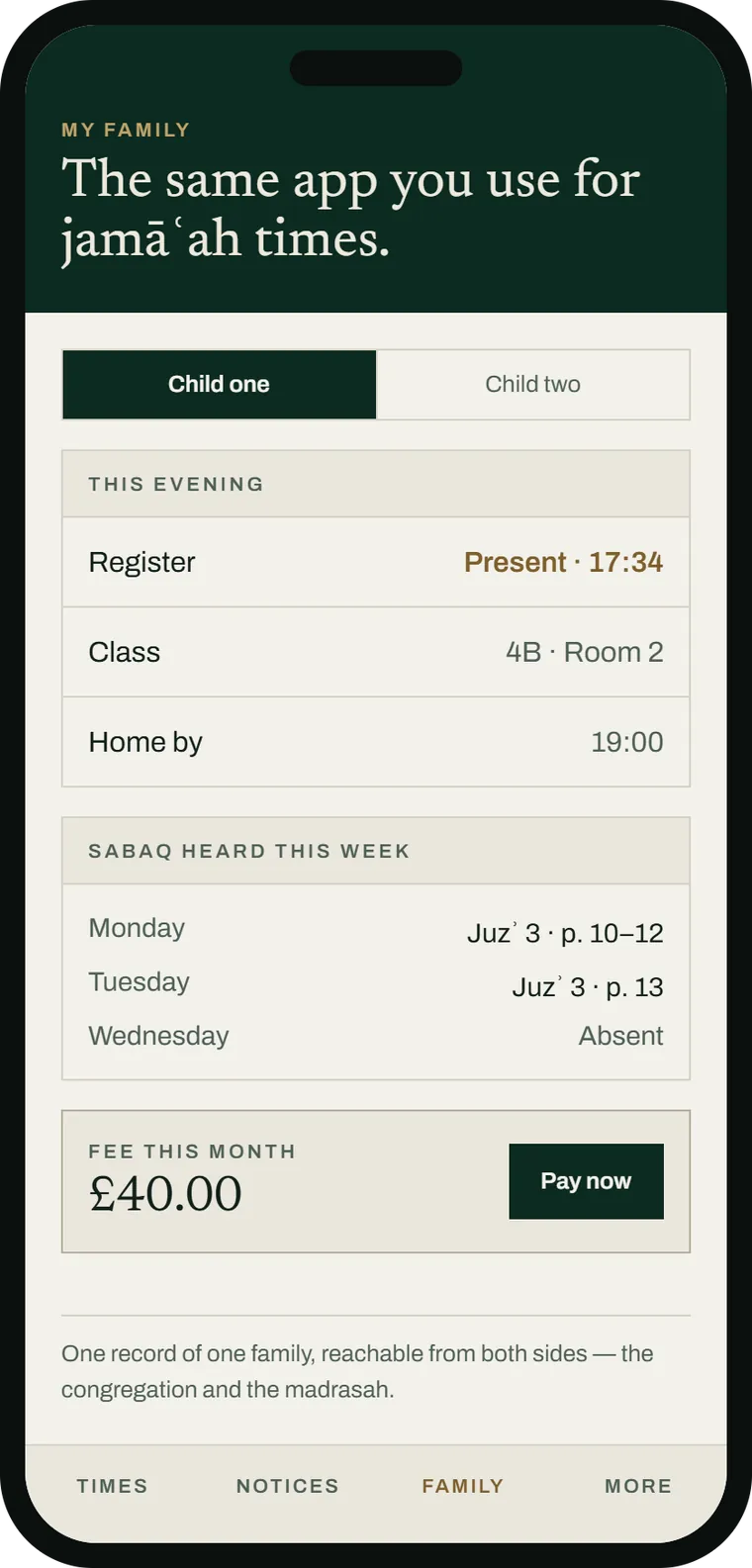
And a parent who can see their own child
The office issues a login against a family, and that parent opens the app they already have for jamāʿah times to find their own child in it: the register marked this evening, what is owed, and what the teacher heard. One household and nothing else — not the class, not the roll, not another family. This is the half nobody else joins up, and it is the reason the two sides are worth buying together rather than separately.
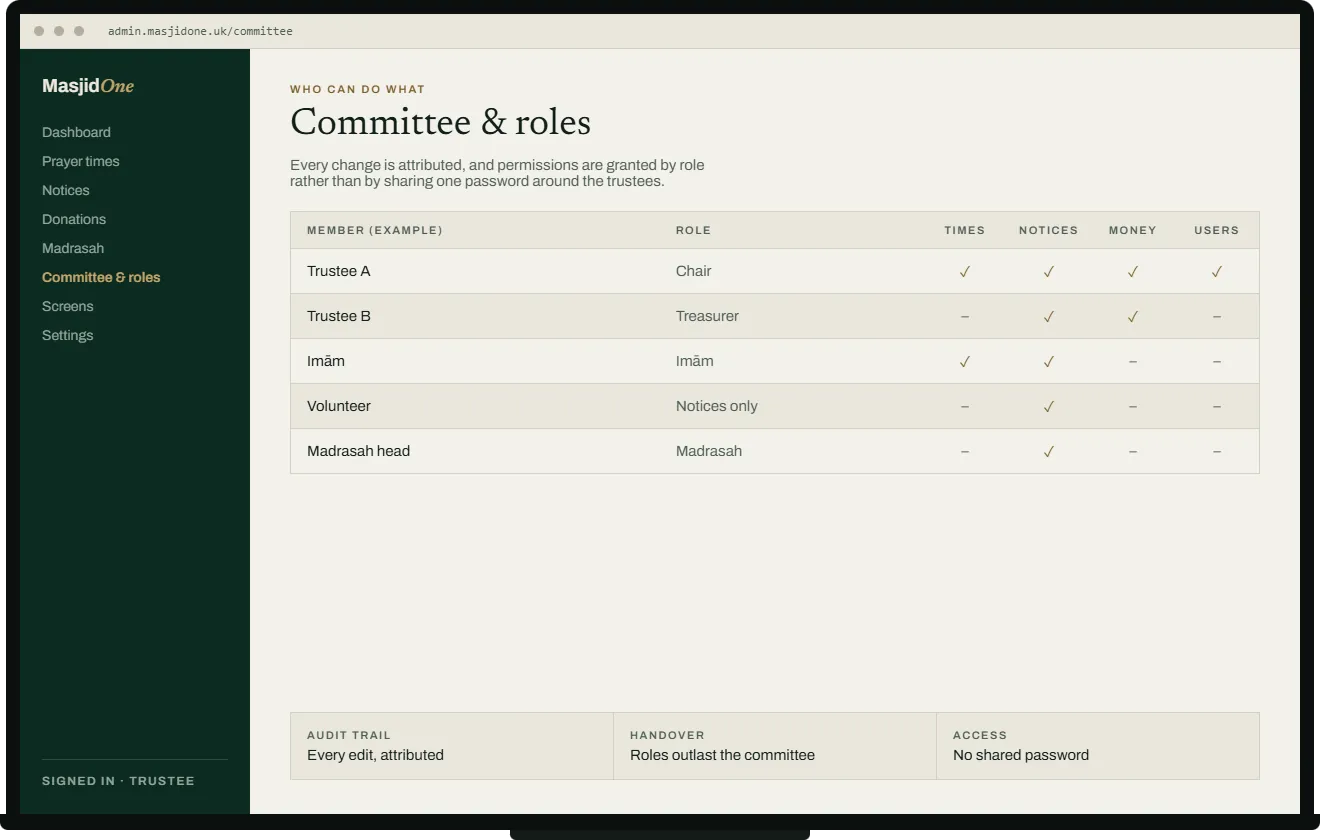
Every teacher on their own login
Not one password taped inside a cupboard. A teacher sees their own classes. The committee sees committee-level data. Nobody sees everything by default, and every change is attributable — which matters most on the day somebody asks who marked a child absent, and matters again when a volunteer moves away and their access has to go with them.
And the rest of it
Daily registers, with a state
A register is drafted, submitted and then locked, so there is a point after which the evening's attendance cannot quietly change. A register that was never submitted is chased rather than silently missing, which is the failure a paper book cannot catch at all.
Attendance history that answers a question
Who missed the last three weeks, which class has slipped, whether this term looks like last term. The point is not the record; it is being able to interrogate it in front of a parent without rehearsing.
One record of the family, siblings linked
Brothers and sisters are joined to one household rather than entered three times with three slightly different addresses. This is the same record the congregation side reads, which is the whole reason the two halves are worth buying together.
Unlimited pupils and teachers
No per-pupil pricing and no paid add-ons. Every pupil, teacher and class is included, however many there are, and nothing is held back behind a higher tier.
Switching, and when
Madrasahs change systems between years, not in the middle of one. The setup fee covers getting your class lists in — from paper, a spreadsheet or whatever you run now — the hall screens configured, and the teachers trained on the thing they will actually use, before the first register is marked. In practice that is one weekend before a new term, on your calendar rather than ours.
Before any masjid is invoiced we commit in writing to ICO registration and a signed data processing agreement, a documented retention policy for a child's record, and one-click full export of everything in a standard format at any time. This platform holds attendance records for your children, so those belong in the agreement rather than in a reassurance.
Which plan includes it
Part of Madrasah, with unlimited pupils, teachers and screens. What it costs is worked out with you on the demonstration, against the size of your madrasah. Migrating from paper is usually simpler than migrating from an existing system, and either way nobody at the masjid retypes a name.
The rest of the system
Every part below runs from the same record of the same family. That join is the product — the modules on their own are not the argument.