The congregation
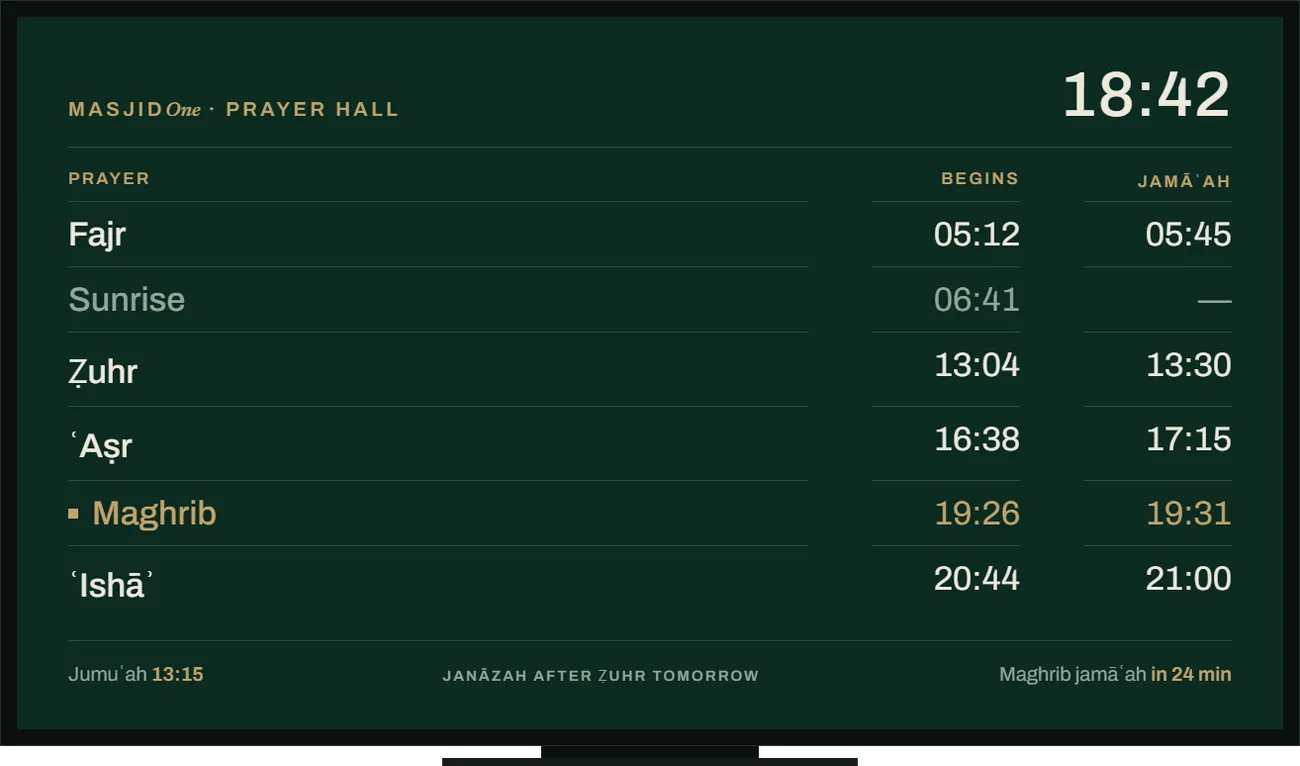
Prayer times and prayer hall screens
Live
Most mosques have a screen in the hall, a timetable on the website and an app somebody downloaded, and all three disagree. The congregation learns which one to trust and ignores the other two. The fix is not a better screen — it is one set of times that every screen, the app and the website all read.
Announcements and janāzah notices, published once
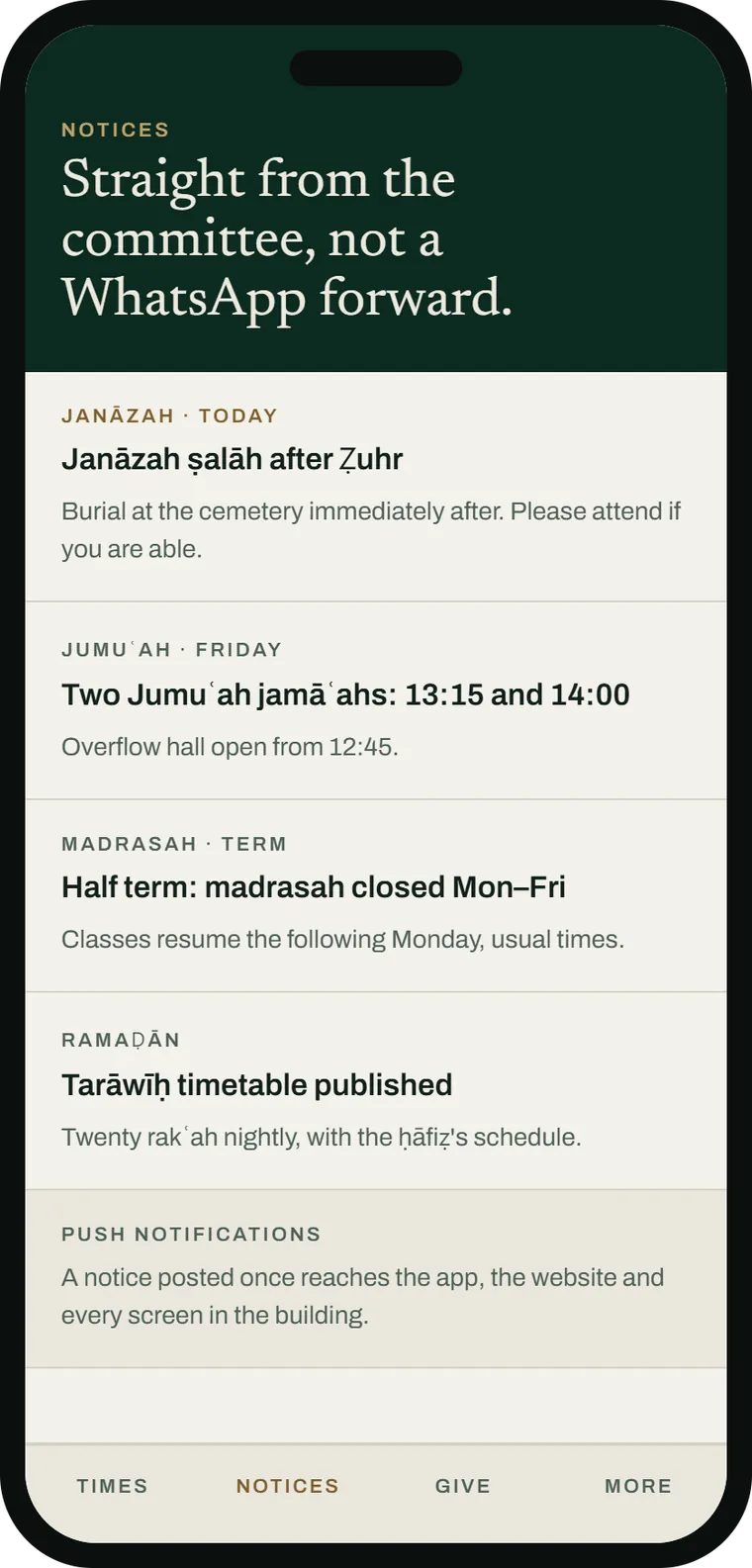
A death known at eleven and a burial after Zuhr is the case that decides whether a system is worth having. Publish once and the notice reaches the hall screens and the phones together — a screen cannot say something the website is not also saying, because both are reading the same published notice. No bulk text to whichever numbers somebody remembered, and nothing to correct in three places.
The same times on your website
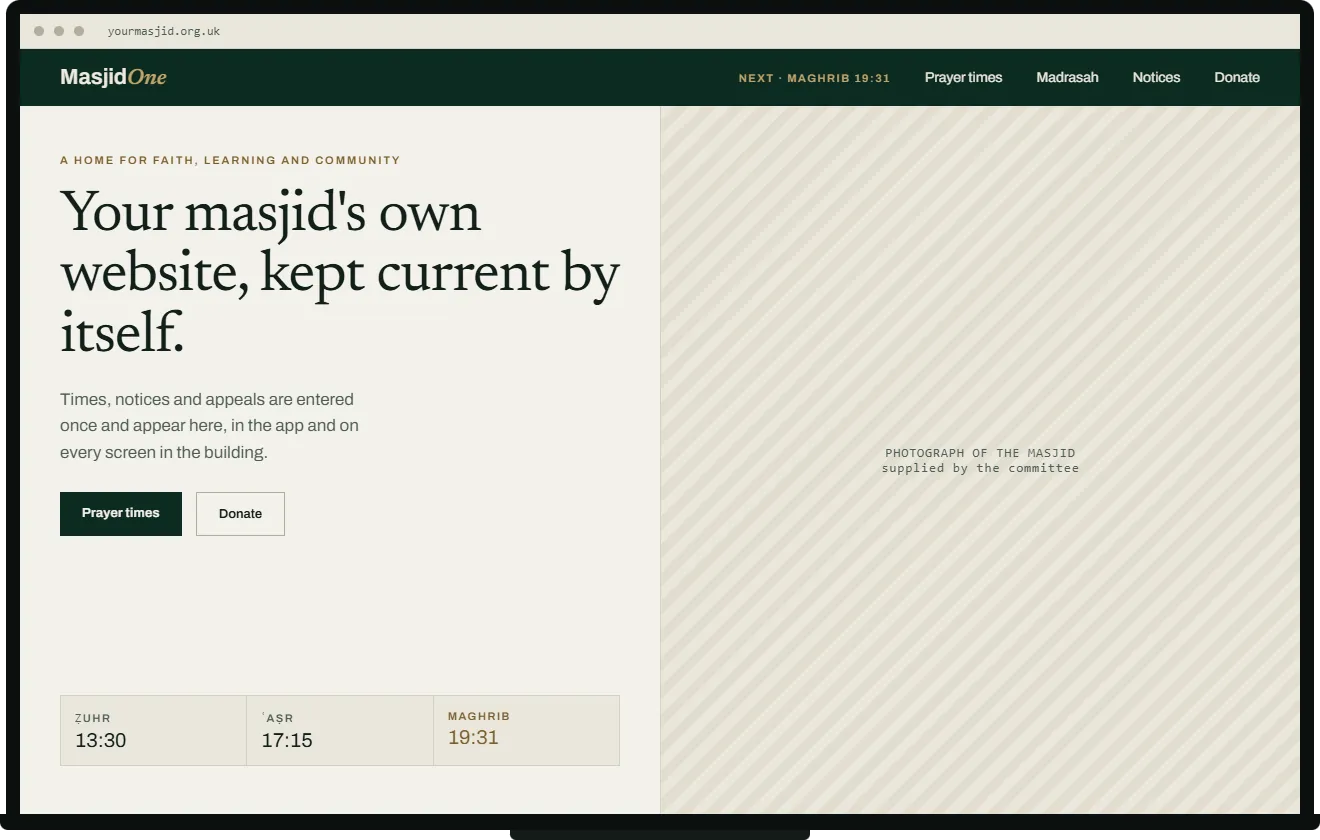
The commonest fault on a mosque website is a timetable that is months out, because keeping it current is somebody's unpaid job. Here there is no such job: the website, the screens and the app are three views of one table. Move a jamāʿah and all three follow, and the per-person reminders shift with them.
A whole year, loaded once
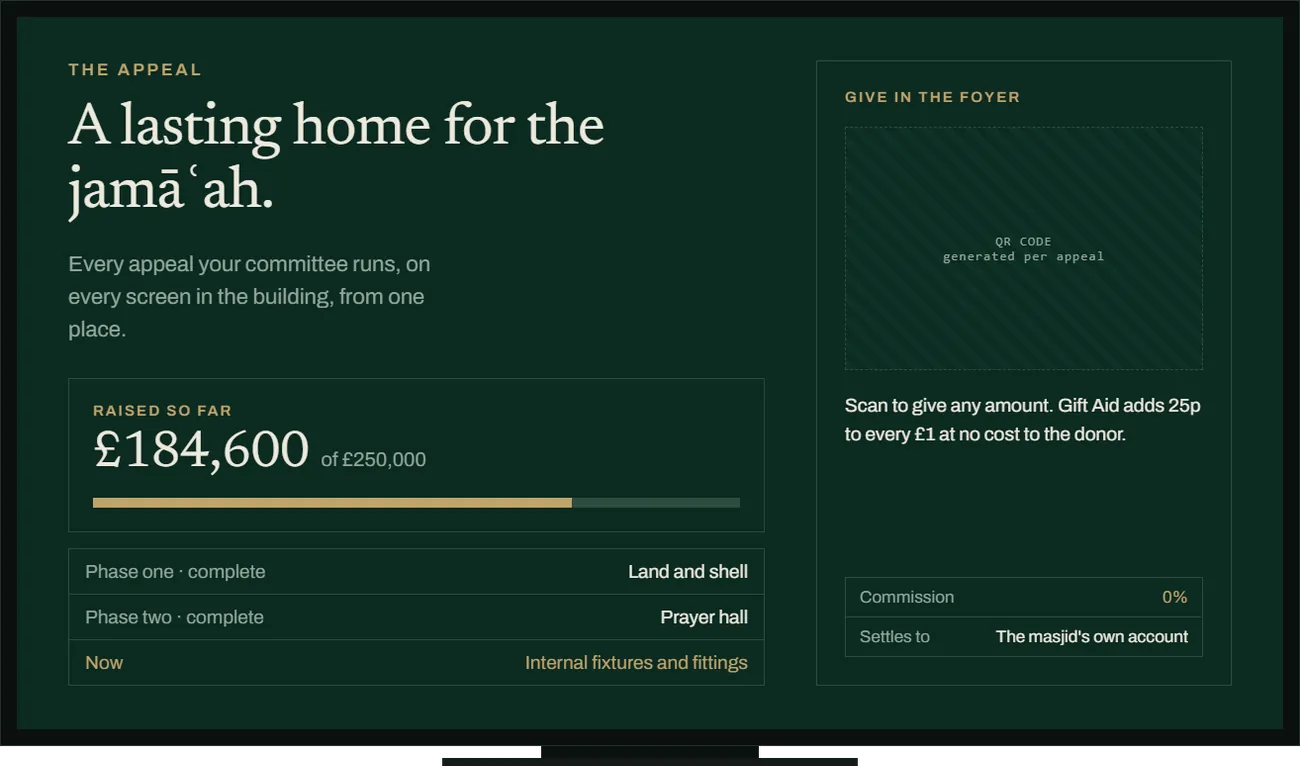
The year's timetable goes in once, so nobody is editing a screen every Thursday and there is no week where the board is right and the screen is a fortnight behind. With the times taking care of themselves, the screens in the foyer are free to carry what the masjid actually wants to say.
And the rest of it
Your times, not a calculation
Jamāʿah is the masjid's own decision, loaded as it is on your board. A calculated time drifts from what the committee actually set, and once the hall and the phone disagree by four minutes nobody believes either.
Unlimited screens, on any TV with a browser
No proprietary box to buy per screen and no per-screen licence. The hall, the foyer, the women's section and the madrasah corridor can all show it, and adding another costs nothing.
Change a time once
Move a jamāʿah and every screen follows, the app updates, the website updates, and the per-person reminders shift with it. There is only one set of times, which is the point — there is nothing to keep in sync because there is nothing to sync.
The next jamāʿah, marked
Beginning and jamāʿah as two columns — the rhythm a UK prayer board already uses — with the next one marked, so somebody walking in reads the one line they came for.
What it costs
Part of Masjid Complete at £179 a month, with setup and migration charged once at £499 — waived outright on twelve months prepaid. Unlimited pupils, teachers and screens; no per-pupil pricing and no paid add-ons. Screens are configured as part of setup, before go-live.
The rest of the system
Every part below runs from the same record of the same family. That join is the product — the modules on their own are not the argument.